by Meg S | Jan 29, 2026
When conflicts arise, whether in business, family matters, or community disputes, many people assume their only option is to head straight to court. But there’s another path that’s often more effective, less expensive, and far less stressful: mediation. If you’ve ever wondered “what is mediation?” or how this process could help resolve your dispute, you’re in the right place.
Understanding Mediation: The Basics
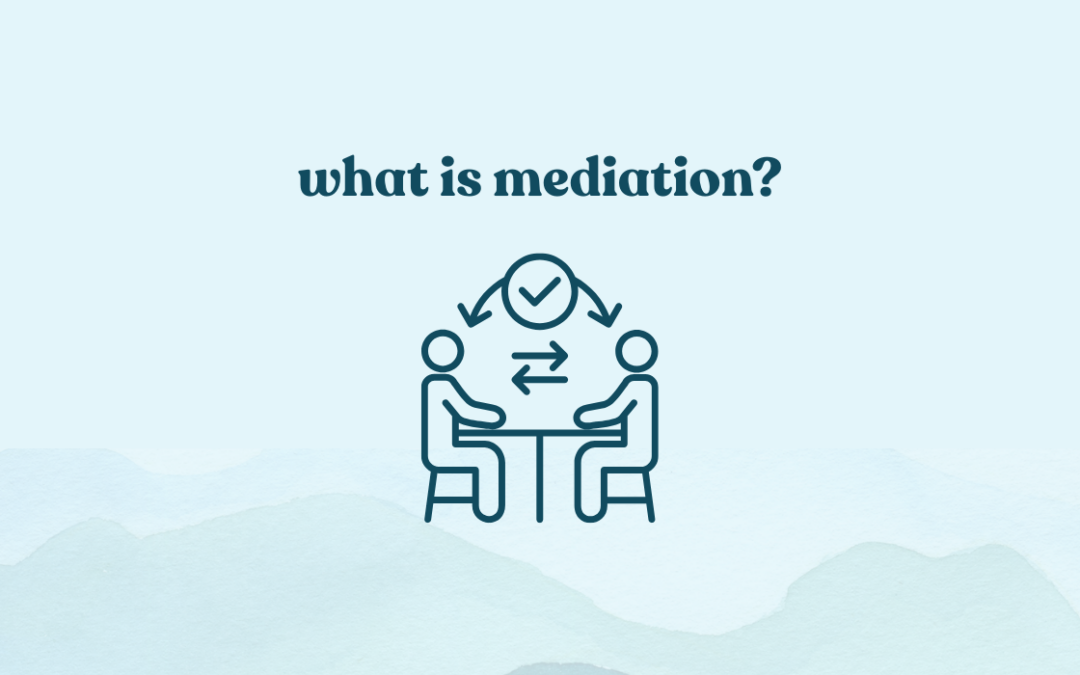
Mediation is a voluntary, confidential process where a neutral third party helps people in conflict find their own solutions. Unlike a judge who makes decisions for you, a mediator facilitates conversation and guides disputing parties toward mutually acceptable agreements.
Think of mediation as having a skilled conversation partner who helps you and the other party communicate more effectively, explore options you might not have considered, and work toward solutions that actually work for everyone involved. It’s not about winning or losing but about finding a path forward that everyone can accept.
How Does Mediation Work?
The mediation process typically follows these key steps. First, each party shares their perspective on the situation without interruption. This isn’t about proving who’s right or wrong but about understanding each person’s concerns and interests.
Next, the mediator helps identify the core issues that need to be addressed, often revealing that the real problems differ from what people initially thought they were fighting about. Together, all parties then brainstorm potential solutions. This collaborative approach often leads to creative outcomes that no one person could have developed alone. Finally, with the mediator’s guidance, parties work toward agreements that address everyone’s most important needs and interests.
What Makes Mediation Different from Court?
Unlike litigation, mediation puts control back in your hands. You maintain decision-making power because no judge imposes a solution. Instead, you create agreements that work for your specific situation. Everything discussed in mediation stays confidential, and the collaborative nature often helps people move forward with better communication rather than damaged relationships.
Most mediations resolve in hours or days, not months or years, and typically cost a fraction of what you’d spend on litigation. Perhaps most importantly, you walk away with solutions you helped create rather than decisions imposed by someone who doesn’t fully understand your unique circumstances.
The Role of the Neutral Third Party
A skilled mediator serves as more than just a referee. They create a safe space for honest dialogue and help parties communicate more effectively. They ask questions that reveal underlying interests and needs, guide the conversation toward productive problem-solving, and ensure everyone has a voice in the process.
The mediator doesn’t take sides, give legal advice, or make decisions for you. Instead, they facilitate a process that empowers you to resolve your own dispute. Think of them as a guide who helps you navigate the conversation and explore possibilities you might not have considered on your own.
When Can Mediation Help?
Mediation works effectively for virtually any conflict where people need to find a way forward together. The process shines particularly bright in situations where relationships matter and creative solutions can benefit everyone involved.
Family and Personal Disputes:
- Family conflicts often involve deep emotions and ongoing relationships that make mediation especially valuable. Divorce proceedings, child custody arrangements, and visitation schedules can be worked out with less trauma and more focus on what’s best for everyone, especially children. Inheritance disputes, elder care decisions, and disagreements between siblings or other family members can be resolved while preserving family bonds that court battles might destroy permanently.
Housing and Property Matters:
- Housing conflicts create unique challenges because people often must continue living or working in close proximity. Landlord-tenant disputes over security deposits, lease violations, or property maintenance can be resolved without the time and expense of eviction proceedings. Neighbor conflicts over property boundaries, noise issues, or shared driveways benefit from mediation’s focus on finding practical solutions that help people coexist peacefully.
- Many everyday disputes that might otherwise end up in small claims court can be resolved more satisfactorily through mediation. Consumer complaints about defective products, service disputes with contractors, and warranty claims often achieve better outcomes when both parties work together to find solutions. These situations frequently involve miscommunication or unmet expectations that mediation can address more effectively than a judge’s ruling.
- Workplace disputes often benefit from mediation because employees and employers typically need to maintain working relationships. Discrimination claims, harassment complaints, and wrongful termination disputes can sometimes be resolved in ways that address underlying workplace issues while meeting everyone’s needs. Even when employment relationships can’t be salvaged, mediation often provides more satisfactory outcomes than formal legal proceedings.
Community and Neighborhood Disputes:
- Community conflicts require special attention to ongoing relationships and shared interests. Homeowners’ association disputes, disagreements over community resources, and conflicts between neighbors can be resolved through mediation with solutions that consider everyone’s needs to live peacefully in the same area. These disputes often involve people who will interact regularly, making mediation’s relationship-preserving approach particularly valuable.
The key requirement across all these situations and other areas of conflict is that all parties must be willing to participate voluntarily and engage in good faith. When people come to the table ready to listen, share their perspectives, and work toward solutions, mediation can be remarkably effective at transforming conflict into cooperation.
Why Choose Mediation?
Beyond the practical benefits of speed and cost savings, mediation offers something unique: the opportunity to be heard and to participate actively in solving your own problems. In court, you present your case and wait for someone else to decide your future. In mediation, you’re an active participant in crafting solutions that reflect your real needs and priorities.
Many people find mediation empowering because it recognizes that those closest to a conflict often understand it best and are in the best position to create workable solutions. When you help design the agreement, you’re more likely to follow through on it because it addresses what matters most to you.
Getting Started with Mediation
If you’re facing a conflict and wondering whether mediation might help, consider these questions:
- Are all parties willing to participate voluntarily?
- Is preserving relationships important to you?
- Do you want more control over the outcome than court would provide?
- Are you looking for a confidential way to resolve issues?
- Would you benefit from a faster, less expensive process?
- Do you prefer working together toward solutions rather than fighting it out?
If you answered yes to any of these questions, mediation could be an excellent option for your situation. To inquire further or schedule a mediation, click here.
Moving Forward
Mediation represents a different way of thinking about conflict. Rather than viewing disputes as battles to be won, mediation treats them as problems to be solved together. This approach recognizes that sustainable solutions come from understanding each other’s needs and working collaboratively toward agreements that everyone can live with.
When disputes arise in your life, remember that going to court isn’t your only option. Mediation offers a path that honors everyone’s voice, protects important relationships, and empowers you to create solutions that truly work for your unique situation. It’s about finding a way forward that allows everyone to maintain their dignity while addressing the real issues at hand.
Whether you’re dealing with a business disagreement, family conflict, or community dispute, mediation provides the tools and framework for moving from conflict to resolution with your relationships, resources, and peace of mind intact. Sometimes the best solutions are the ones we create together!

by Meg S | Jul 15, 2025
One of the core programs offered by the Dispute Resolution Center of King County is family mediation, where KCDRC mediators support people navigating parenting plans, divorces, or other family-related changes and tensions. Most often, this includes co-parents working through parenting plans or modifying existing agreements, as well as divorces. Though family mediations can also involve other issues such as siblings managing elder care or family members dividing up shared responsibilities after loss.
Parties often enter a family mediation session feeling uncertain or resigned. During intake, they often share that they’ve already tried everything they can think of and have made requests in various ways, sometimes over many years. If children are involved, each parent may feel they are acting in the children’s best interests while the other parent is not. Mediation doesn’t always feel hopeful – just something they were told by a court or in their parenting plan that they had to try. Family mediation isn’t about fixing everything in a single conversation. It’s about making space for people in conflict, often people with shared histories and responsibilities, to step out of old patterns and have a space to communicate differently. To speak plainly. To be heard. To imagine what moving forward might look like, even if the path seems unclear.
Preparation is KEY!
Self-determination is the cornerstone of successful family mediation. Unlike traditional legal proceedings, mediation places decision-making power directly in the hands of the parties involved, fostering a sense of ownership and empowerment. As one staff member explained, “At KCDRC, thankfully we’re not on commission and we don’t need to pressure people to mediate with us just for the sake of it. We also serve the community by making sure parties have the information and support to decide what’s best for them among their available options.”
With that freedom and opportunity comes responsibility. For mediation to be effective, each party decides not only to proceed with KCDRC family mediation services, but also to commit to thoughtful preparation and intentional participation. Family mediation works best when parties arrive prepared, not just with paperwork, but with insight.
At KCDRC, family case management sets the stage for meaningful options for resolution by helping to equip parties with the perspective and communication tools they need. Case management coaching also supports individuals in navigating the difficult emotions and decisions that they will need to grapple with during mediation. The KCDRC family intake process helps parties understand the real possibilities of mediation: what it can help them solve and what it can’t. Even if a mediation session with a settlement agreement doesn’t follow, many people find relief and clarity after a KCDRC family intake conversation. During KCDRC family intakes, cases are screened for suitability for mediation, and we also provide a lot of resource referrals.
Supporting the Parties
When KCDRC intake does lead to a family mediation session, this process supports parties entering the mediation with focus and ready to explore outcomes: What information do parties need to bring to help inform the mediation conversation? What are the best, worst, and most realistic options for each of them, and for the others involved? Parties almost always not only need this preparation, but also ongoing support during the family mediation session in expressing concerns with clarity and empathy.
KCDRC family mediators respect that parties are the experts regarding their own situation and do not tell people what to do or push them toward compromises they may be unwilling or unable to follow through on. Instead, mediators help participants slow down, name what truly matters, and explore options that they themselves—not a third party—get to choose. When appropriate, parties are encouraged to speak with an attorney to review any agreement made. Parties may also choose to have their attorney present in mediation.
Shifts in Conversation
A common shift during family mediation is in the way people speak. Mediators often notice that first one party and then the other will begin to use phrases like “from my perspective” or “what I’m hearing from you is.” As KCDRC mediator Beckey Sukovaty shared, “So much of what we as mediators do that’s especially important for family mediations, is helping people shift from trying to prove a point to asking a question. From blaming to a focus on practical realities. From ‘this is what always happens’ to ‘what could we do differently going forward ?’” These are small moments, but they show the conversation is changing shape. What began as feeling hopeless and frustrated is turning toward focusing on mutual problem-solving.
Those shifts often, but don’t always, lead to formal agreement. However, those shifts almost always mean they can end the mediation somewhere better for themselves and their families than where they started. Sometimes, the biggest success in family mediation isn’t a signed agreement. It’s a softened tone, a thoughtful pause while really listening, a willingness to see a familiar story from a new angle or making informal plans to keep working together in a new way with better communication.
by Meg S | May 14, 2025
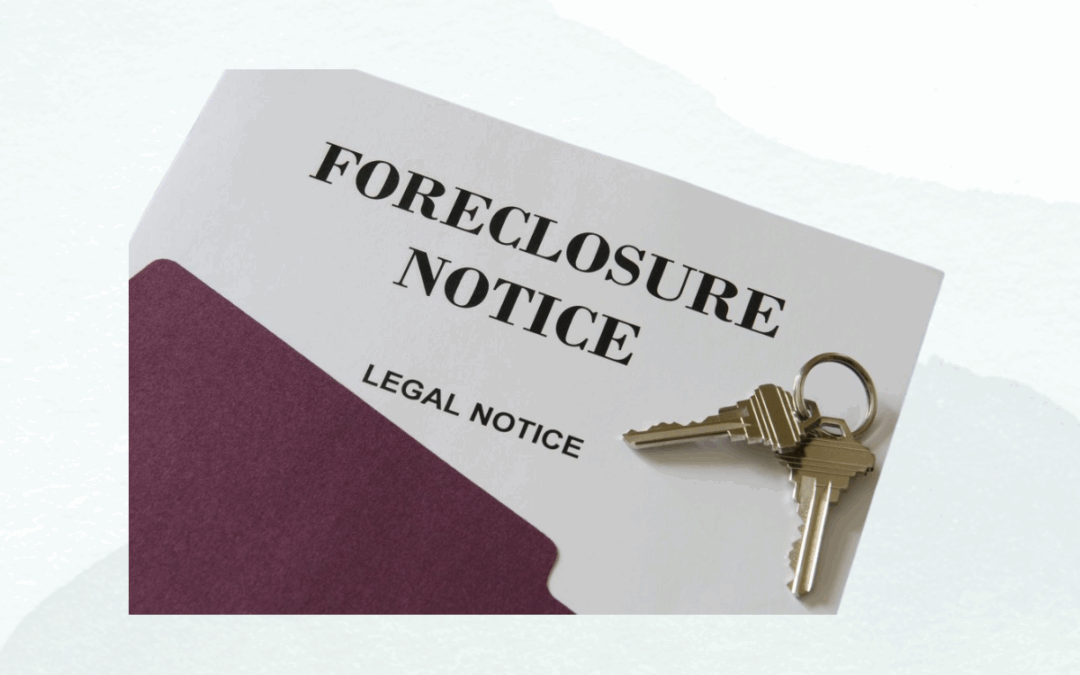
Foreclosure prevention through mediation is one of the most effective and underused tools available to homeowners facing financial stress. At the Dispute Resolution Center of King County (KCDRC), mediation helps residents navigate tough conversations with lenders, resolve misunderstandings, and find alternatives before foreclosure becomes a reality.
This work is closely tied to the HOMES program—Homeowners’ Outreach, Mentoring, and Education Services—which helps older adults, veterans, and people with disabilities apply for King County’s property tax exemption. Together, these services provide meaningful support to residents at risk of housing instability.
What is Mediation?
Mediation is a voluntary, confidential process where a neutral third party helps people have structured conversations and work toward agreements. At KCDRC, our trained mediators don’t take sides or offer legal advice. Instead, they create space for understanding, problem-solving, and clarity during difficult moments.
In the context of housing, this can mean facilitating conversations between:
-
Homeowners and mortgage servicers
-
Family members navigating shared property decisions
-
Homeowners and county officials or financial counselors
How Mediation Helps Prevent Foreclosure
When homeowners fall behind on payments or struggle with taxes, communication often breaks down. Mediation brings everyone to the table and offers a chance to:
-
Clarify the situation
-
Identify options such as payment plans, tax relief, or temporary adjustments
-
Connect with support resources, including legal aid and financial counseling
-
Rebuild trust and reduce emotional strain
Mediation can be especially effective when paired with programs like HOMES (Homeowners’ Outreach, Mentoring, and Education Services), which helps eligible residents apply for King County’s property tax exemption. By addressing both the financial and relational sides of housing stress, residents are more likely to find long-term stability.
Real-Life Outcomes
While every situation is different, here are a few common outcomes of housing-related mediation at KCDRC:
-
Agreement on a new repayment timeline
-
Coordination of property tax exemption documentation
-
Family agreement on shared ownership or financial responsibilities
-
Referrals to housing counselors or attorneys when needed
How to Access Help
If you or someone you know is at risk of foreclosure or struggling with housing stress, reach out early. The sooner mediation begins; the more options are typically available.
You can:
You don’t have to face foreclosure alone. Mediation can be the first step toward clarity, stability, and peace of mind.
by Meg S | Mar 31, 2025
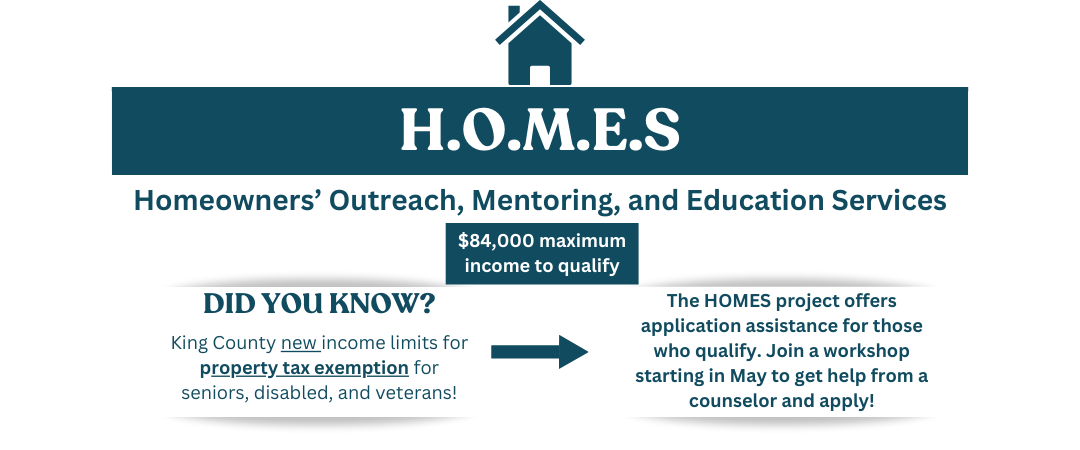
Starting in May 2025, a powerful new resource is available to help eligible residents apply for the property tax exemption King County offers. The HOMES program—short for Homeowners’ Outreach, Mentoring, and Education Services—supports older adults, veterans, and people with disabilities in completing their applications for this valuable benefit.
Thanks to a recent income limit increase to $84,000, more residents now qualify for the property tax exemption King County provides, helping ease the financial burden for those who need it most.
What Services Does HOMES Provide?
Application Assistance Workshops
Starting in May 2025, HOMES will host monthly in-person workshops on the third Saturday of each month. During these workshops, trained counselors will be available to help residents complete their property tax exemption applications.
Eligibility Requirements:
What to Bring:
-
Previous year’s tax return
-
Disability verification letter
-
Proof of age/ID (WA driver’s license or similar)
-
Property ownership documents (such as a deed)
-
Records of out-of-pocket medical expenses (doctor’s letters, pharmacy records, bank statements, etc.)
Virtual Information Hub
Beginning in June, the King County Dispute Resolution Center (KCDRC) will host virtual Information Hub meetings. These sessions are open to all homeowners and provide access to a range of community resources focused on foreclosure prevention.
KCDRC is a trusted nonprofit offering mediation and conflict resolution services. Their mediators have helped many residents navigate housing challenges and avoid foreclosure through guided conversations and problem-solving.
How to Get Involved
Whether you’re a homeowner concerned about rising taxes or supporting a loved one through the application process, the HOMES program is here to guide you every step of the way.
Together, we can build stronger, more stable communities—one home at a time.
by Meg S | Mar 19, 2025
Empowering Youth Through Peer Mediation: A Year in Review
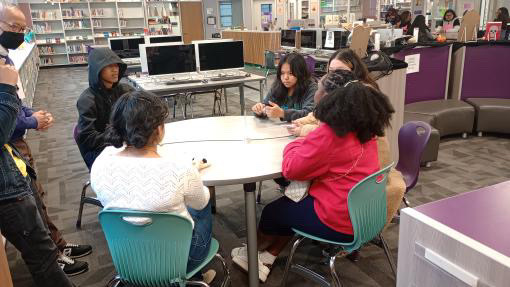
We take a moment to celebrate the incredible progress of our Peer Mediation program and reflect on the positive impact it has had on students, staff, and the broader school community. This year, we have seen an increase in student engagement, skill development, and meaningful conflict resolution through peer-led mediations.
Building Skills for Lifelong Success
Throughout the year, students have developed and honed essential conflict resolution skills, including negotiation techniques and effective questioning strategies. Recent training sessions focused on open-ended and closed-ended questions, giving students hands-on practice in identifying the differences and understanding how the right questions can lead to deeper conversations. Another valuable learning experience came from the classic “orange story,” which helped students grasp the importance of uncovering underlying needs to create win-win solutions.

The “orange story” tells of two children fighting over a large, juice-laden orange, each insisting they need the whole fruit. Frustrated by their bickering, their father cuts the orange in half, giving each child an equal share. However, both children burst into tears. When asked why, the first child explains she needed the zest of a whole orange to bake a cake, while the second child needed all the juice to make orange juice. Had they communicated their true needs, they could have both fully benefited rather than settling for less than what they required. This lesson reinforced for students the power of understanding the root causes of conflicts and how creative problem-solving can lead to better outcomes for all involved. The key is finding what’s underneath the reasoning—to find the value there—so that a solution can be crafted that truly meets the needs of everyone involved.
In addition to structured trainings, students participated in peer circles to learn more about open-ended and closed-ended questions. This hands-on experience demonstrated how different types of questions impact communication and conflict resolution. Students were asked to “notice what kind of information comes out’ when using different types of questions, helping them understand how open-ended questions can lead to deeper discussions and better solutions. The overwhelming consensus was that mediation is not just a beneficial tool but a necessary resource within their school communities.
Growth in Peer Mediation Engagement
We are proud to report an increase in peer mediation referrals at Showalter Middle School, with all peer mediation students having participated in at least two mediations. Several of these mediations have resulted in reconciliations, with students becoming good friends again. The increase in referrals is due in part to stronger coordination with school administrators, as well as a greater presence of KCDRC mediation staff in schools. This hands-on involvement has encouraged students to turn to mediation as a trusted resource for resolving conflicts in a constructive and supportive environment.
Students themselves have voiced their enthusiasm for the program, emphasizing how much they value the opportunity to develop leadership skills and contribute to a positive school culture. Students have expressed a desire for the mediation space to feel like “a place that’s warm and welcoming.” These small but meaningful changes reinforce the importance of student-driven solutions in making peer mediation more effective and accessible.
Looking to the Future
As we move into a new grant cycle, we remain committed to sustaining and expanding our conflict resolution programming. While some schools have fully embraced peer mediation, others have expressed interest in alternative approaches to conflict resolution, including relationship skills workshops and career-focused development. We are actively working with school administrators to explore creative ways to adapt our programming to meet student needs while staying true to our mission of promoting healthy communication and problem-solving.
Furthermore, we have received positive feedback from students about how peer mediation has helped them navigate conflicts more effectively. Parents have also expressed support for the program, recognizing its role in fostering better communication and problem-solving skills. Hearing firsthand how mediation has transformed student experiences will help us refine and strengthen our approach moving forward.
A Heartfelt Thank You
None of this progress would be possible without the dedication of our peer mediators, school staff, and community supporters. Your commitment to fostering a culture of peace and collaboration is truly inspiring. As we await updates on our new funding opportunities, we look forward to celebrating the accomplishments of this year’s mediators and planning for an even brighter future.
Stay tuned for our newsletter in June, where we will highlight the year’s successes and share exciting updates on the next steps for our program.

by Meg S | Feb 26, 2025
Conflict as a Path to Understanding
Conflict is a natural part of human interaction, but it doesn’t have to create lasting division. With the right approach, disputes can become opportunities for understanding, healing, and growth. At the Dispute Resolution Center of King County, we’ve seen time and again how mediation fosters resolution while strengthening relationships.
A Case for Mediation: Finding Common Ground
Recently, an organization facing internal challenges turned to mediation for support. The situation involved multiple individuals with differing perspectives, and emotions ran high. The organization’s leadership sought a way forward—one that would prioritize collaboration and understanding rather than tension and division.
Through structured dialogue and professional facilitation, mediation provided a space where all voices could be heard. Skilled mediators, fluent in both English and Spanish, ensured that participants could fully express themselves, breaking down barriers to communication. The process was patient, thoughtful, and focused on finding a resolution that honored everyone’s concerns.
The Impact of Mediation: Voices from Participants
One participant shared that mediation helped them feel “supported and understood,” leading to an outcome they once thought was impossible. Another described the mediators as “patient, caring, and very skilled at asking the right questions,” helping everyone involved feel heard and valued. Ultimately, what had been a difficult conflict became an opportunity for deeper trust and collaboration.
Beyond Resolution: Building Stronger Communities
Mediation is more than just resolving disputes—it’s about building stronger, healthier communities. It fosters open communication, encourages problem-solving, and equips individuals and organizations with the tools to navigate future challenges with confidence.
Find Support Through Mediation
If your workplace, community, or family is facing a conflict, mediation can help. The Dispute Resolution Center of King County is here to provide professional, compassionate, and effective conflict resolution services tailored to your needs.
Schedule a mediation.