by Meg S | Nov 19, 2024
Peer Mediation Training
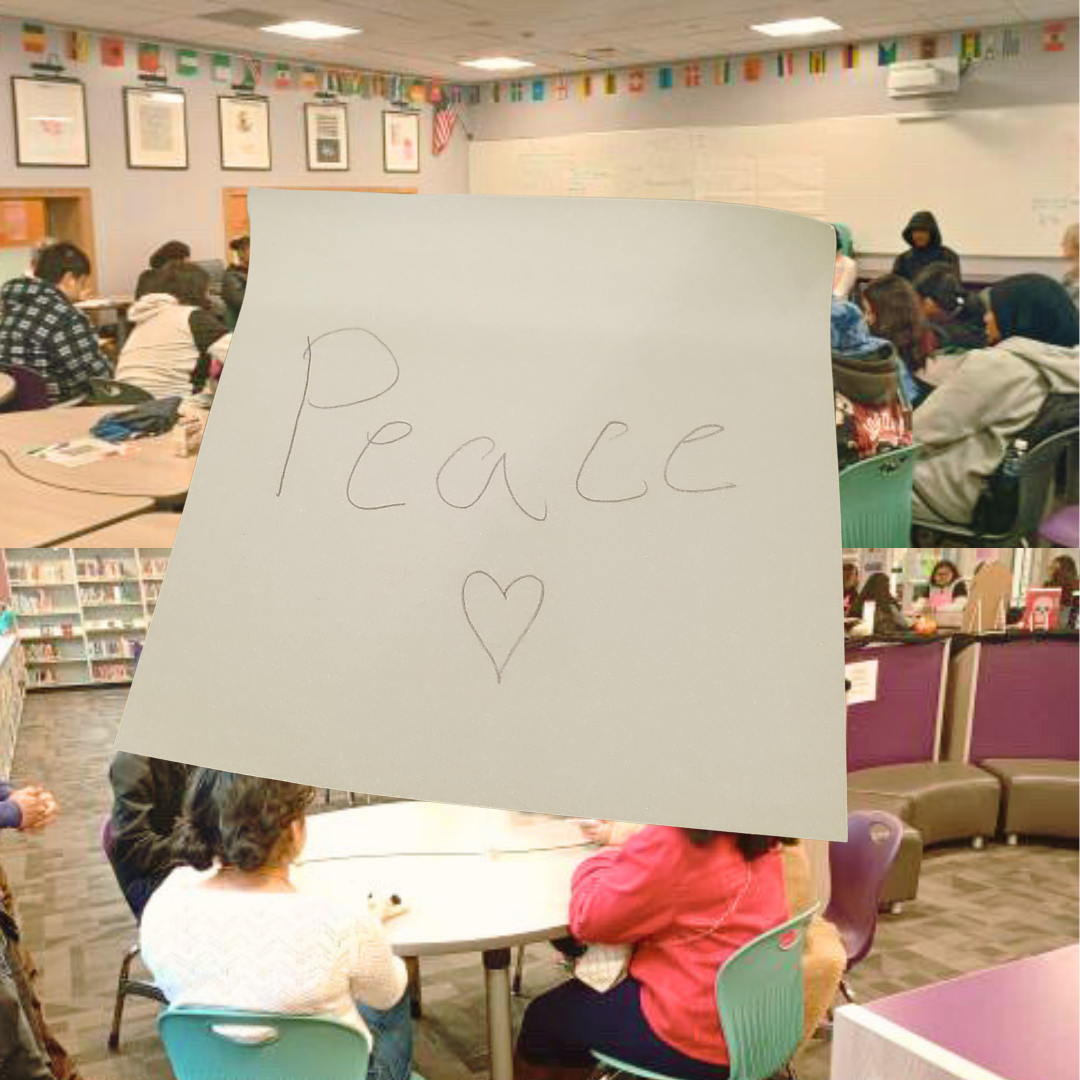
Our Youth Development team recently concluded a transformative peer mediation training for students at both Foster High School and Showalter Middle School, empowering them with essential conflict-resolution skills. Foster High’s training took place over a four-day, 12-hour program with around 20 students, including both new trainees and returning ninth graders who had previously participated in peer mediation at Showalter. Showalter Middle School also held a training session in September, where eight students engaged in foundational mediation skills.
The training sessions were led by KCDRC volunteers Sarah, Marilyn, and Sue, along with trainers Jazz and Vinh from King County ADR. Camilla, a dedicated peer mediator at Foster High, served as lead trainer, guiding students through mock mediations to develop their conflict-resolution abilities. The goal was to ensure students had practical experience, from preparing for a mediation to conducting a post-session debrief. Participants particularly honed their abilities to understand the mediation process, reframe statements, and reflect emotions—vital tools for creating an empathetic, understanding environment.
A Real-World Application
One of the program’s highlights was an unexpected real-world application. During a practice session at Foster High School, Miss LaJoy, the new peer mediation coordinator and attendance secretary, received an urgent request from the school’s principal: a live conflict required immediate mediation. Two student mediators eagerly volunteered, stepping out of the training to handle the situation. With coaching support from their trainer, Fergie, the students navigated an emotionally charged mediation session, helping those involved reach a constructive plan to move forward. Miss LaJoy praised the student mediators for their impressive work under pressure, underscoring the positive impact and real potential of peer mediation.
Looking Forward
Reflecting on the training experience, students expressed a desire to continue improving their mediation skills, especially in mastering open-ended questions to uncover deeper issues and promote understanding. To support this, KCDRC has planned ongoing sessions to strengthen students’ skills and reinforce their development as mediators. Peer mediation teams at both Foster and Showalter will participate in monthly follow-ups with KCDRC trainers, allowing for continuous growth and support. The success of the program has encouraged both Foster High and Showalter Middle School to integrate peer mediation as a core element of their school culture. The administration at both schools is enthusiastic about sustaining the program long-term and is exploring funding opportunities to ensure its continuation for years to come.
Engaging Youth Through Creativity
At Showalter Middle School, home of the Vikings, the KCDRC youth development program recently introduced a unique way to teach mediation skills—using bird puppets! Volunteer Sue shared her insights about these interactive training sessions, designed to make learning about conflict resolution engaging and memorable for students.
 The bird puppets, named “Memory” and “Thought,” served as both icebreakers and teaching tools. During opening circles, students passed the puppets around, using them to indicate whose turn it was to speak. This simple yet effective activity helped foster active listening and encouraged everyone to share their ideas. Sue introduced “Memory,” a raven inspired by Norse mythology, to teach students the importance of reflecting on past experiences and setting clear expectations in mediation. Drawing on the story of Odin’s two advising ravens, the activity helped students understand how mediators guide conversations to stay productive, avoiding the chaos of “opening a can of worms.”
Students practiced the mediator opening script in pairs, then acted out key concepts with gestures, making learning fun and interactive. Later, a baby eagle puppet helped illustrate how to explore personal experiences during mediation—examining the past, present, and future to resolve conflicts effectively. This creative approach not only engaged students but also connected them to the rich symbolism of their Viking mascot. A big thank you to Sue for her thoughtfulness and creativity in helping our youth develop essential life skills!
These articles were originally published in the KCDRC newsletter: sign up here.
by Meg S | Oct 17, 2024
Conflict Resolution Month, celebrated each October, is a time to recognize the value of peaceful conflict resolution in communities across the United States. It originated from efforts in Colorado, where in 2007, the Colorado State Legislature passed a resolution designating October as Conflict Resolution Month. The initiative aimed to increase public awareness about mediation, negotiation, and other collaborative ways of resolving disputes.
The idea quickly gained momentum, with various organizations and states adopting similar measures to promote the importance of conflict resolution. The month-long celebration highlights the work of professionals in the field, such as mediators, arbitrators, and facilitators, who help individuals and communities settle disagreements without the need for adversarial proceedings.
Conflict Resolution Month encourages public engagement in constructive dialogues, offering workshops, panels, and events that teach effective communication and problem-solving skills. It aims to foster healthier relationships, reduce violence, and promote justice through understanding and collaboration.
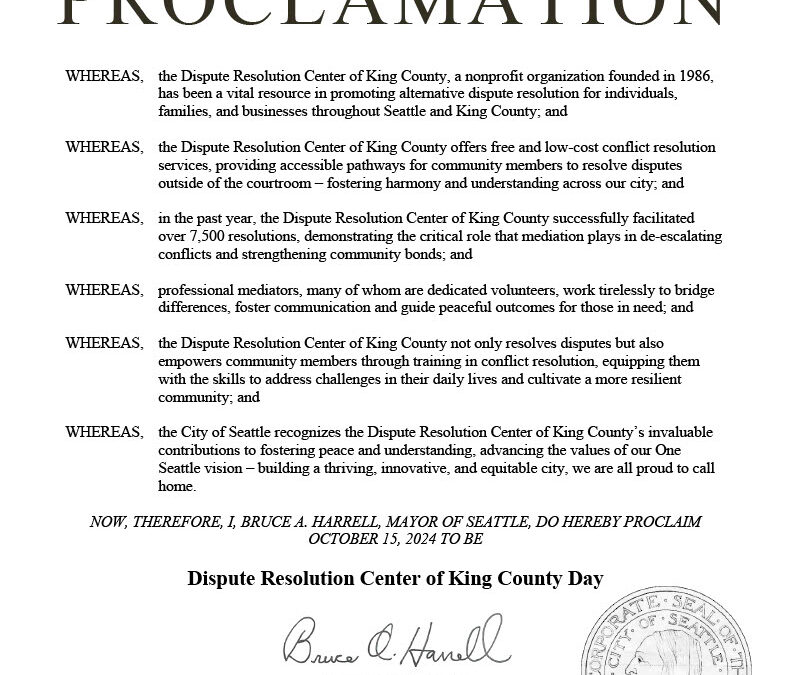
Today, many cities, including Seattle, have embraced Conflict Resolution Month, often culminating in special proclamations, like the one issued for the Dispute Resolution Center of King County in 2024. The ongoing efforts ensure that conflict resolution remains a vital tool for building peaceful and resilient communities.
by Meg S | Sep 11, 2024
The Dispute Resolution Center of King County (KCDRC) is thrilled to announce our move to a new office space in the heart of downtown Seattle. This transition represents more than just a change of location; it’s an investment in accessibility, community connection, and our role in supporting the revitalization of the city.
For years, we had been searching for a new office space that could accommodate both our team and our vision. Our former location, as well as the fully remote office, became challenging in some ways. As our Executive Director, Dave Martine, shared, “We realized that our location was becoming a barrier to the community we serve. Moving to downtown offers a place that’s easier to access for everyone.”
After a thorough search, Seattle’s downtown became the clear choice. While there were initial concerns about parking and safety, Martine explained the shift in thinking: “We want to be where the people are. Being downtown means we are more centrally located, and it’s easier for both our team and the public to reach us.”
This move also aligns with KCDRC’s values of equity and accessibility. “It’s really about being accessible to everyone,” said Martine. “We’re a people business, and downtown Seattle opens doors to new opportunities for collaboration with other organizations and businesses that we couldn’t have imagined five years ago.”
In addition to accessibility, the new office presents exciting prospects for community engagement. “We want it to be a place used by the community, our volunteers, and staff,” Martine added. “Ideally, it could become more of a social hub—maybe we’ll even host events like ‘conflict coaching’ hours, where people can come to us instead of heading to the bar after dealing with a difficult coworker.”
KCDRC is also proud to contribute to the revitalization of downtown Seattle, a city still grappling with post-pandemic recovery. “When we first started looking, the occupancy rate downtown was around 37%, which has probably worsened,” Martine said. “But you still see people there—it’s not a dead zone. By establishing ourselves here, we’re not only placing a foothold in the community, but we’re also supporting the growth and vibrancy of the area.”
A special thanks goes out to the team who helped make this move possible, including our real estate agents, board members, and staff like Michelle, Caroline, Daniel, Ryan, Meg, and others. “We couldn’t have done it without them,” Martine shared. “This new chapter for KCDRC marks an exciting step forward, and we look forward to continuing our work in serving King County from the heart of Seattle.”
This article was initially posted in our newsletter: for more updates, sign up here.
by Meg S | Aug 28, 2024
Mediation is a great way to resolve conflicts without going to court. Whether you’re dealing with a workplace issue, a family disagreement, a housing conflict, or a business dispute, being prepared can make all the difference. Here’s how you can get ready for your mediation session.
Mediation is a process where a neutral person (the mediator) helps both sides talk things through and find a solution. The mediator won’t decide who’s right or wrong—they’re there to help you communicate and come to an agreement (if you so choose).
2. Set Your Goals
Think about what you really want out of this mediation. What’s most important to you? Knowing your goals will help you stay focused during the session.
3. Gather Your Documents
Get all the paperwork that relates to the dispute—contracts, emails, receipts, whatever might help your case. Have it organized and ready to go.
4. Understand Your Rights
Make sure you know your rights and any legal responsibilities related to the issue. If you’re unsure, consider talking to a lawyer before the session so you’re not caught off guard.
5. Be Ready to Listen and Talk
Mediation is about communication, so be ready to listen to the other side and clearly explain your own views. Keep calm and respectful, even when things get tense.
6. Think About Compromise
Mediation usually involves some give-and-take. Think about what you might be willing to compromise on to reach a solution that works for both sides.
7. Keep Emotions in Check
It’s natural to feel emotional but try to stay calm and collected during the session. If things get heated, take a deep breath before responding.
8. Talk to Your Mediator
If you’re unsure about how the process works, don’t hesitate to ask your mediator. Knowing what to expect can help ease any nerves.
9. Visualize a Win-Win Outcome
Imagine leaving the session with a solution that feels good to everyone involved. A positive mindset can help you stay focused on finding a resolution.
10. Plan for the Next Steps
Think about what you’ll do after the mediation. How will you put the agreement into action? Planning ahead can help make sure the solution sticks.
In a Nutshell
Being prepared for mediation means understanding the process, knowing what you want, and being open to finding a middle ground. With these tips, you’ll be ready to approach your session with confidence and work toward a positive outcome.
Schedule a mediation now?
by Meg S | Aug 16, 2024
In a world that is increasingly diverse, effective conflict resolution must honor and reflect the unique cultural contexts of our communities. This understanding drove us to design Conflict Resolution for Everyone (CoRE™), a program rooted in cultural relevance and inclusivity. Here’s how we’re working to make conflict resolution more accessible, effective, and diverse.
Empowering Communities to Resolve Conflicts
Our first goal is to equip individuals with culturally relevant skills to manage conflicts in their communities. We believe everyone can resolve disputes, and our training enhances these skills for independent conflict resolution. We also support community leaders, such as elders, to be even more effective.
Training Mediators with Cultural Awareness
We train mediators to offer conflict resolution services that are culturally inclusive. Traditional mediation often reflects a white, Eurocentric perspective, which doesn’t always meet the needs of diverse communities. Our program shifts this focus, providing mediators with tools to approach conflict resolution through a culturally diverse lens, addressing biases, and ensuring meaningful participation.
Increasing Diversity in Conflict Resolution
Our goal is to increase diversity among conflict resolution professionals. We make our training accessible to minority communities and ensure certification standards are clear and fair. We need more mediators who reflect the diversity of our society, and we’re committed to making that happen.
A Thoughtful and Inclusive Design Process
We didn’t develop CoRE™ in isolation. We started with listening sessions across communities to understand their norms around communication, conflict resolution, and learning. Using this input, we crafted and tested our curriculum to meet their needs. We continuously improve our program with feedback from every session.
Committed to Inclusivity and Impact
CoRE™ is more than training; it’s a commitment to fostering conflict resolution that respects and uplifts every community’s cultural strengths. We’re excited to continue this journey with you, sharing our progress as we work together toward a more inclusive future.
Funding
Last but not least, CoRE™ was originally funded by a proviso put forward by representative Jamila Taylor in the 30th legislative district. We’re so thankful for this funding and also grateful for the work that King County Council member, Claudia Balducci, and her staff did to help us receive funding to make CoRE™ available for everyone in King County.
by Meg S | Jul 19, 2024
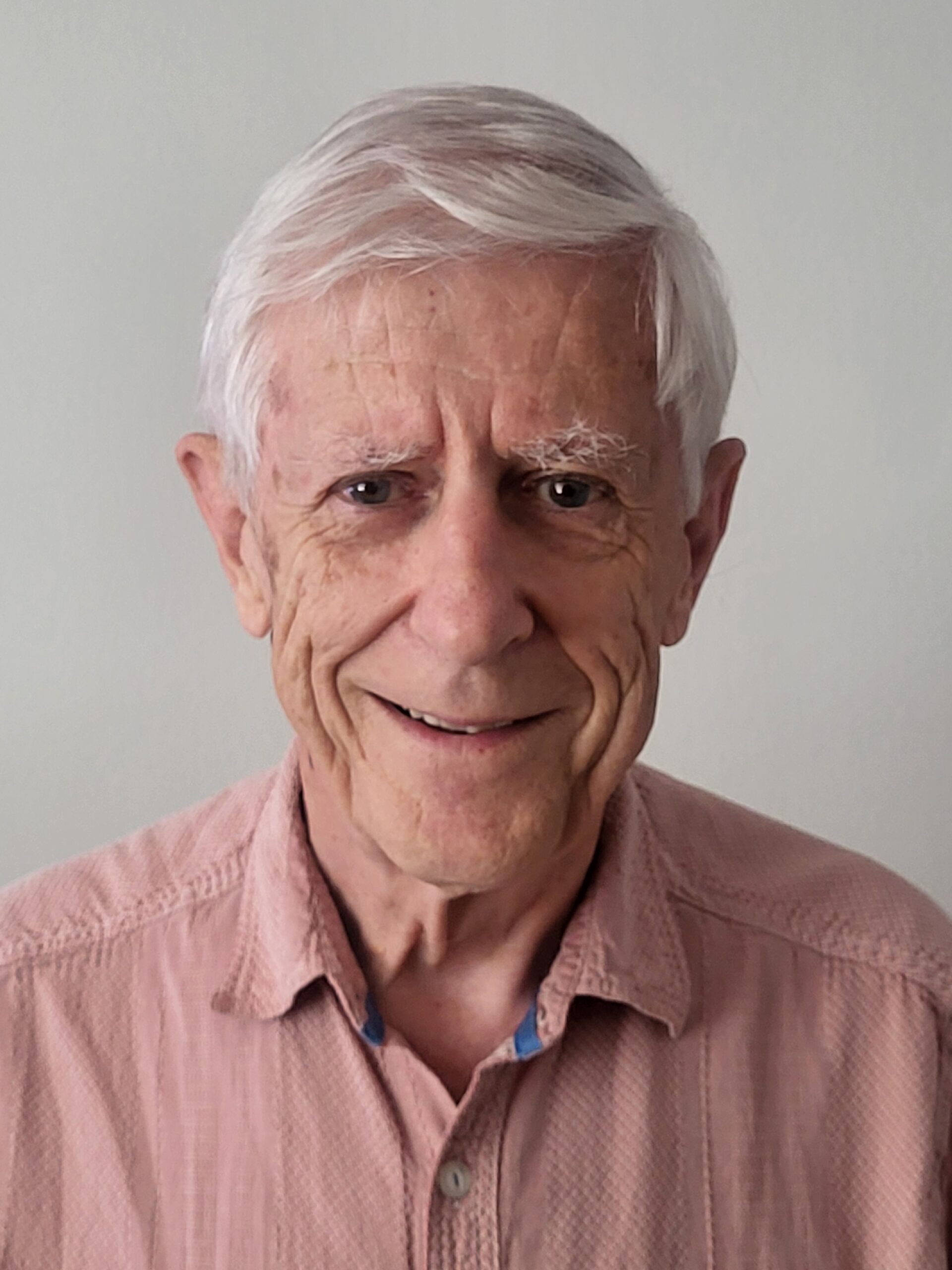
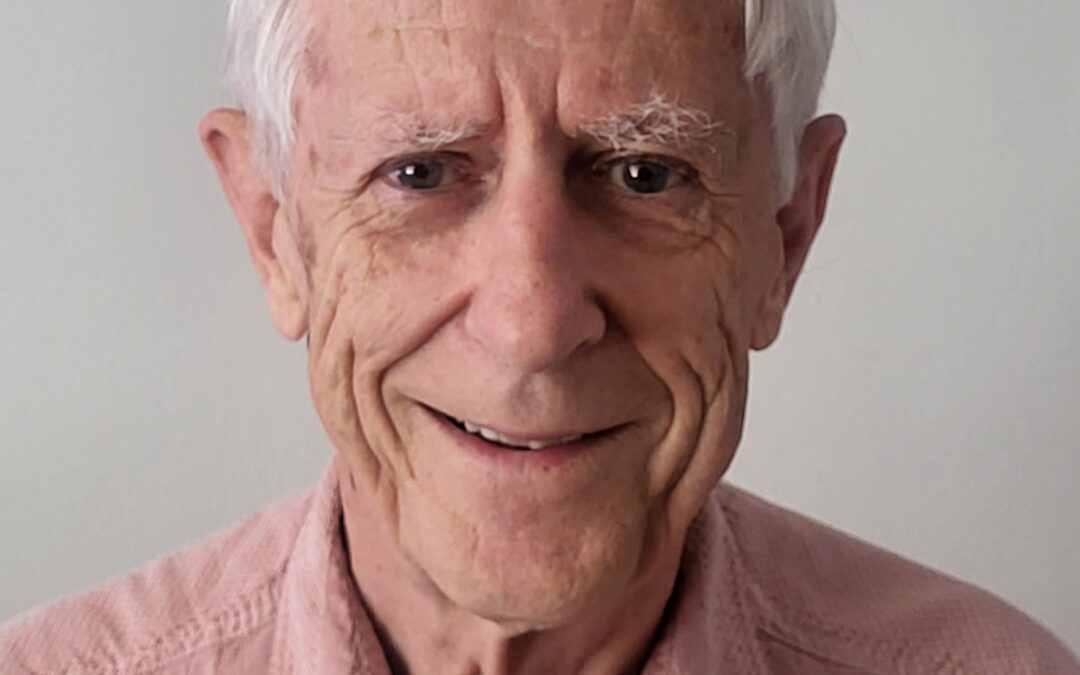
Ross Geoghegan, a retired mathematics professor from Binghamton, New York, found himself drawn into the world of conflict resolution and mediation, and eventually practicing in King County. His journey began long before, as a seasoned educator at the State University of New York, where he taught and chaired the mathematics department before retiring.
“I was sliding towards retirement,” he chuckled, reflecting on his transition. “I knew about dispute resolution from a friend back in Binghamton.”

Ross Geoghegan
In 2019, Ross underwent training with Accord, Binghamton’s own dispute resolution center, where he learned the ropes of mediation. Initially handling cases involving custody and small claims, his role evolved with the pandemic’s onset, pushing proceedings online. Courts increasingly required mediation before legal battles, a shift Ross embraced cautiously, aware of the emotional stakes involved.
“When Covid hit, everything went online,” he noted. “I focused mostly on family cases, trying to find common ground in difficult situations.”
Moving to Seattle in the fall of 2021 to be closer to his grandchildren, Ross eagerly sought out opportunities at The Dispute Resolution Center of King County (KCDRC). He joined our eviction mediation program under the ERPP initiative, aimed at preventing eviction amidst economic turmoil.
“One case that stands out,” he shared thoughtfully, “was an older woman facing eviction… and it was heartbreaking.”
Through mediation, Ross sought not just conflict resolutions but also emotional support for vulnerable tenants like the older woman. His efforts under ERPP were impactful until legislative changes ended the program in mid-2023, prompting a shift to VISTA, a voluntary mediation initiative for landlord-tenant conflicts created by KCDRC.
“VISTA has been a bit slower,” he admitted. “Many landlords aren’t keen on mediation unless it’s mandated. I would describe ERPP as eviction mediation, and VISTA as tenant-landlord mediation. The cases I’ve had in VISTA, there have been one or two that have involved avoiding eviction, but most of them are disputes between landlord and tenant, where the tenant is not in danger of eviction, but each is angry with the other, or one is angry with the other over something.”
Beyond mediation, Ross remains active in research mathematics, collaborating both nationally and internationally, while cherishing time with his grandchildren- the primary reason for his move to Seattle.
“I’m grateful for the opportunity to be close to family,” he remarked warmly. “It’s been a fulfilling chapter.”
Looking ahead, Ross contemplates further contributions to mediation, considering small claims as a potential next step. His journey underscores the transformative impact of mediation in resolving disputes with empathy and understanding. Ultimately, his dedication to mediation stands as a testament to the power of compassionate conflict resolution in building stronger communities. KCDRC feels incredible lucky to have such passionate and dedicated volunteers, Ross being a primary example.
——————————————————————————————————————————————————————————-
This article was originally posted in the KCDRC
newsletter.